|
16th Sunday |
|
|
Dear Preachers:
Sometimes even so-called experts and people who should know better cannot predict how things are going to turn out. An expert evaluating a potential football coach said of him, “He possesses minimal football knowledge. Lacks motivation.” He was talking about Vince Lombardi, who, though he “lacked motivation,” was the successful football coach quoted for saying, “Winning isn’t everything, it’s the only thing.” Eighteen publishers turned down a story about a seagull written by Richard Bach. “Jonathan Livingston Sea Gull” finally got published in 1970. In five years, it sold more than seven million copies in the U.S. alone. A music teacher told Enrico Caruso’s parents that he had “no voice at all.”
After Fred Astaire’s screen test the evaluating director wrote, “Can’t act, slightly bald, can dance a little.” Astaire had the memo framed and put over his fire place. Even parents cannot always judge their own children’s abilities. Louisa May Alcott, known for the classic “Little Women,” was encouraged by her parents to find work as a servant or seamstress. As they say, “Ya’ just never know!”
A friend’s father has a 1,200-acre farm. Reflecting on today’s parable she said, “I left my family’s farm when I went away to school. On a recent visit, early in the growing season, I looked at my father’s just-sprouting wheat fields, and I realized I could not tell the weeds from the wheat. When they are sprouting, they look identical to one another----until they ripen!” That is what the owner in the parable cautions, “Do not act too quickly. Do not jump to conclusions. Ya’ just never know.”
Summer is a great baseball time. We fans love to watch the game on tv or better, go to a ball park and shout support for the home team. If we are late arriving, the first thing we ask is, “Who’s winning?” We do not ask, “Who’s losing?” But as much as we love the game, if our team loses, we get over it, life moves on. But we tend to ask the same question about a more crucial issue. “Who’s winning in the world, the good, or the evil people?” We also want to know, in the long run, “Who’s going to win?” These days things do not look like they are getting better for those on the side of good. The past twentieth century was the most brutal in the history of the world. Remember the movie “Schindler’s List?” It tells how Schindler cleverly saved a few thousand Jews during World War II. The movie gave us something to cheer about. But six million Jews died, and countless others. And on and on. So, who is winning, good or evil? Are we on the losing side?
We are talking about weeds here – the weeds the parable describes as sown among the good wheat by an enemy at night when everyone was asleep. And these weeds are not just out there in the big wide world, they are much closer at hand, even within the church we love. Someone said to me recently, “I just can’t stand one more headline about clergy misconduct, or a bishop’s cover-up!”
The early church saved this parable, and Matthew recorded it, because they also asked the same questions we and the servants in the parable ask, “Master, did you not sow good seed in your field? Where have the weeds come from?” And the question behind their question is ours as well, “Will evil or good have the last word? Who is going to win?” The parable does not give an easy answer, it does not explain it all to us... why evil exists... good things get corrupted... kids get messed up... suffering happens to good people, etc. But it does admit to the problem; good and evil coexist, up close to one another, up close to our lives – and they engage in a struggle for a final victory.
The weeds seem to get into everything, even the landscape of our own spiritual field. Now there are definitely times when we must make decisions about what is right and wrong. We do try to maintain standards, especially for our children. But this parable, addressed to our church and personal lives – where in our fervor we are quick to judge and act, pull up and cast aside – does suggest all the evidence is not in yet. The parable also suggests that in some cases, even though we are fairly sure, we may not be in the position to cast a deciding judgment. The owner, after all, does introduce a note of caution and a plea for patience. In effect he is saying, “You do not really know enough. You do not have grounds to judge. All the evidence is not in yet.”
Jesus, the teller of the parable, knew from his own experience. He chose servants to do God’s work who, if you looked at the early signs, did not turn out as expected. Judas, who was the keeper of the purse, a mover and shaker, showed early signs of promise. What about the Peter’s failures, Thomas the doubter and the other men and women who kept producing the wrong answers to Jesus’ questions? These latter ones showed little initial promise, yet Jesus gave them a chance to grow and yield a rich harvest. “Ya’ just never know.”
Today’s parable is an encouraging one for each of us. It is a story of grace, patience and hope. Aren’t we, who frequently look back on mistakes we have made, glad we had time to change and make amends? Aren’t we grateful for the chance and help God gave us to work things out? What used to be a weed, we were sure, turned out to be wheat. Suppose we had been judged on the spot back then? Today, as we look at our present situation, we can still detect weeds in ourselves and others – we are sure. Rather than being overcome by discouragement, the parable proposes a note of hope. After all, good seed has been planted in us and is growing. The burden of the struggle is not ours alone. We trust the owner, who knows what is happening, to help us sort things out. All this is summarized in a familiar, but often under-appreciated word----Grace.
Even as we feel dismayed at how much there is still left to do and how many questions we have (“Who’s winning?”), the parable gives us confidence. God is in charge. God is not indifferent to our struggle. God is aware of what still needs doing. God is guiding us in our struggle to bring about good. So, we will play the parable back in our imaginations, especially when things around us dismay and discourage us. We will look out at the field and think we know what needs doing. But we will hear this parable, and the voice that says, “Not so fast. Ya’ just never know.”
Click here for a link to this Sunday’s readings: https://bible.usccb.org/bible/readings/071926.cfm
“Those who are just must be kind.” —Wisdom 12: 19
I think it is safe to say that one of the most common images of justice is the blindfolded woman (Lady Justice) holding a scale and a sword. She actually wasn’t blindfolded until the 15th century. The blindfold represents objectivity, in that justice is or should be meted out objectively, without fear or favor, regardless of identity, money, power, or weakness. Although this figure represents many ancient goddesses from Egypt (Maat, Isis) to Hellenic Greece (Themis, Dike) to Rome (Iustitia), the symbol does not encapsulate how we understand biblical justice.
In Father John Heagle’s book, Justice Rising: The Emerging Biblical Vision (Orbis, 2010), he writes: “Biblical justice is not blind or neutral, It sees with the eyes of God. It feels with the heart of God. It [biblical justice] is an urgent call to see the plight of the poor and to respond with passion and commitment. In this sense, we can say that God’s justice is ‘tilted’ in favor of those who are victimized by unjust social structures or whose voices are silenced by oppressors. Recent Christian social teaching has recovered this biblical vision of justice by emphasizing the ‘preferential option for the poor’ ” (62). Heagle also states that, “Biblical justice is inherently relational and focused on the common good” (61). It is here that we see the kindness of our just Lord. There are many unjust situations in the world today that are completely man-made and lacking thought for the common good. For instance, reflect on the often-unjust situations in which our farm workers labor, such as low wages, inadequate health care, lack of access to essential medical and dental services, and stringent immigration laws.
“In 2025,. . .the workforce that powers the fields and farms across the country remains largely composed of undocumented immigrants. Undocumented immigrants in agriculture are the hidden yet essential workforce, filling critical gaps left by native-born citizens and legal residents. In fact, studies estimate that approximately 50-70 percent of all agricultural labor in the U.S. is performed by undocumented workers. This equates to over one million individuals who, despite harsh challenges and limited legal rights, are indispensable to the productivity and sustainability of American food production.” Undocumented Immigrants In Agriculture: Key Stats And Insights
Most of all, these are fellow human beings and deserve our concern. Let us see and act with the eyes and the heart of God.
Barbara Molinari Quinby, MPS, Director Office of Human Life, Dignity, and Justice Ministries Holy Name of Jesus Cathedral, Raleigh, NC
Mini-reflections on the Sunday scripture readings designed for persons on the run. “Faith Book” is also brief enough to be posted in the Sunday parish bulletins people take home.
From today’s letter to the Romans:
The Spirit comes to the aid of our weakness; for we do not know how to pray as we ought, but the Spirit himself intercedes with inexpressible groanings.
Reflection:
This passage is a great comfort for anyone who has ever struggled to pray. Paul reminds us that prayer is not primarily our work; it is God's work within us. There are times when we cannot find the right words, when our hearts are burdened by grief, confusion, fear, or uncertainty. In those moments, the Holy Spirit does not abandon us. The Spirit prays within us, carrying to God even the deepest longings we cannot express. We are never alone in prayer. Even our silence can become a prayer when we trust the Spirit dwelling within us.
So, we ask ourselves:
· When have I found it difficult to pray or find the right words for God? · How might I trust the Holy Spirit more during times of weakness or uncertainty? · What burdens or concerns do I need to place in God's hands today?
POSTCARDS TO DEATH-ROW INMATES
---Pope Francis
Inmates on death row are the most forgotten people in the prison system. Each week I am posting in this space several inmates’ names and locations. I invite you to write a postcard to one or more of them to let them know that: we have not forgotten them; are praying for them and their families; or whatever personal encouragement you might like to give them. If the inmate responds, you might consider becoming pen pals.
Please write to:
• James Jaynes #0206197 (On death row since 6/4/1999) • Andre Fletcher #0130628 (12/9/1997) • Terry Hyatt #0199877 (2/7/2000) Central Prison PO Box 247, Phoenix MD 21131 (While the prison is in Raleigh mail for inmates is processed at this address)
For more information on the Catholic position on the death penalty go to the Catholic Mobilizing Network: http://catholicsmobilizing.org
“First Impressions” is a service to preachers and those wishing to prepare for Sunday worship. The Dominican Friars sponsor it. If you would like “First Impressions” sent weekly to a friend, CLICK HERE.
If you would like to support this ministry, please send tax deductible contributions to: Fr. Jude Siciliano, OP St. Albert Priory 3150 Vince Hagan Drive Irving, Texas 75062-4736
Make checks payable to: Dominican Friars.
Or go to our webpage to make a secure online donation: https://www.PreacherExchange.com/donations.htm
FREE EMAILS:
We have two English email lists available: 1. A preacher's early reflections on the upcoming Sunday's readings and liturgy, always at least one week ahead of the Liturgical Calendar. “A tool to help Preachers prepare for their next trip to the Ambo.” Available in Spanish & English and authored by Fr. Jude Siciliano, OP. 2. Click Here to Sign Up. 2. “VOLUME II” • These reflections follow the Liturgical Calendar and appear here about mid-week each week. They are written by various guest authors. • If you would like to submit a reflection of your own, then Click Here to send it as a “Request to Post” to the Webmaster. Deadline is Monday of each week for the upcoming Sunday.
OUR WEBSITE:
https://www.PreacherExchange.com - Where you will find Preachers Exchange, which includes “First Impressions,” and “Volume 2” as well as articles, book reviews, daily homilies and other material pertinent to preaching and Scripture reflection.
FOR INFORMATION OF “ANY KIND” OR TO MAKE A SUGGESTION: Click Here
(Always includes the 6 latest reflections with the newest first.)
• |
|




























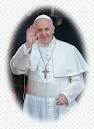 “One has to strongly affirm
that condemnation to the death penalty is an inhuman measure that humiliates
personal dignity, in whatever form it is carried out.”
“One has to strongly affirm
that condemnation to the death penalty is an inhuman measure that humiliates
personal dignity, in whatever form it is carried out.”


