|
All Saints |
|
|
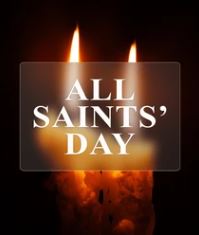
“FIRST IMPRESSIONS” FEAST OF ALL SAINTS November 1, 2026 Rev. 7: 2-4, 9-14; Psalm 24; I John 3:1-3; Matthew 5:1-12 By: Jude Siciliano, OP
Dear Preachers:
I am a college sophomore attending Mass on the feast of All Saints at our University chapel. I hear the assigned Scriptures for the day and I am puzzled. I wish I could say my confusion was about a profound theological issue. But I’m 19 years old, not the age when I, or my classmates, pondered serious spiritual, or theological questions. After hearing the reading from the Book of Revelations I’m confused by the response to the question put by the elder about the identity of the innumerable people dressed in white robes: “from every nation, race, people and tongue.”
The elder answers his own question: “These are the ones who have survived the time of great distress, they have washed their robes and made them white in the Blood of the Lamb.” There is the source of my question: how can you wash robes in blood and have them come out white? It was not until years later that I decided to satisfy the quandary the reading raised in my sophomore mind.
Revelation presents us with several visions of the heavenly court. Earlier (chapter 4) it gave a vision of God sitting on a throne, surrounded by 24 elders. They are beholding the image of the slain Lamb of God, who has “power and wealth and wisdom and might and honor and glory and blessing” (5:12).
In today’s reading a vast number of people have joined the audience, “From every nation, from all tribes and peoples and languages” (v. 9). It is a white-robed throng holding palm branches. Their white robes are given them because they were martyred. Their palm branches are celebratory, signs of a feast. They are innumerable and the language that identifies them is apocalyptic, “These are the ones who survived the time of great distress.”
That is how their robes were washed in the blood of the Lamb. They were martyred during the great persecutions for their faith in the Lamb of God. Now these “witnesses” (that’s what “martyrs” means) are saved from pain, hunger, thirst and persecution. Are they the people Jesus describes in the Beatitudes who, despite present afflictions for their faith in him, “will be comforted… will inherit the earth...will be satisfied, etc.”?
Originally, All Saints Day celebrated those who had died as martyrs in persecutions. In the early church, and some churches today, “saints” was the name for Christians (Cor. 1:2; 14:33). Today we remember, celebrate, and assure one another, “See what God can do among ordinary people! Just as they are saints, so shall we be.” Correction – “So are we now! Praise God!”
If we are in church today (or, possibly live streaming) what will we see? Of course, the Book of the Scriptures catches our attention during the first part of the Mass. After hearing God’s Word we turn to the altar and the bread and wine we will offer for consecration. But, as our eyes turn towards the altar, perhaps our gaze will fall on the images of the saints that surround us in statutes, paintings and mosaics on the walls.
There they are, those Beatitude people described in today’s gospel: once poor in spirit, mourning, lowly, justice-seekers, persecuted, martyred for their faith, merciful, peacemakers – God’s children whose lives reflected the animating and faith-sustaining presence of the Spirit. After such reminders of God’s great works in the lives of the saints, we have reason to give thanks. The presider will introduce the Eucharistic Prayer, “Let us give thanks to the Lord, our God.” And we will respond, “It is right and just.” True enough, but there is more to include in our thanks, more saints, not from the past. but those who are among us now. Who are they? How do their lives reflect the holiness of God? Thank you God for their witness to your presence among us, doing what you have done through your Son and his saints through the ages.
On my desk I have a reminder of God’s active and inclusive Spirit. It is Robert Ellsberg’s book, “All Saints” (New York: Crossroad, 1998). Ellsberg includes biographical sketches of those named saints by the Catholic Church. He also includes Christians from other denominations, as well as Muslims, Jews and even those without membership in any faith tradition. It is what the Book of Revelation reminds us today: “After this I had a vision of a great multitude, which no one could count, from every nation, race, people and tongue.”
The feast of All Saints is a feast of the Holy Spirit. The second person of the Trinity took flesh to save us. The third person, the Holy Spirit, is God acting among us, bringing God’s plan for us humans to fulfillment. The Spirit works in many ways, but one sign of the Spirit’s presence is the creation of a community of life. The Spirit is God’s communication of grace, pouring the life of God into us limited humans, who often go astray, forming us into a people who are enabled to walk in God’s ways. As the visionary of the Book of Revelation tells us today: “After this I had a vision of a great multitude which no one could count, from every nation, race, people and tongue.” The Spirit links all humans through the universal love of God. How do saints come about? Through the limitless work of the Spirit. Where and when does this happen? In every land and every age. Through the Spirit we are, even now, being united to God and connected to one another. I like the tradition in some churches and denominations that begins prayer by greeting the gathered community with, “Good morning saints!”
And isn’t that what we celebrate today, the Spirit’s ongoing work of grace that forms us into a holy community, a community of saints?
Click here for a link to this Sunday’s readings: https://bible.usccb.org/bible/readings/110126.cfm
“A Church that sets no limits to love, that knows no enemies to fight but only men and women to love, is the Church that the world needs today.”
Pope Leo XIV
Beloved: See what love the Father has bestowed on us that we may be called the children of God. 1 John 3:1
All Saints’ Day is an opportunity to reflect on what it means to live as children of God. And what better way than to look at the lives of saints through the lens of some themes of Catholic social teaching. The following quotes come from the book, Saints and Social Justice: A Guide to Changing the World by Brandon Vogt (Our Sunday Visitor, 2013).
LIFE AND DIGNITY OF THE HUMAN PERSON--St. Peter Claver--Born in Spain in 1580, he would spend his life in Columbia serving African slaves. Yearly, ten thousand Africans arrived despite Popes Paul III and Urban VIII condemning slavery. Peter “sensed that while he couldn’t suppress this great injustice, he could at least alleviate the suffering by promoting the dignity of the slaves” (30).
OPTION FOR THE POOR AND VULNERABLE--Blessed Pier Giorgio Frassati--“Applying his gifts as a layperson, Pier Giorgio knew that followers of Jesus “should always prefer the needs, concerns, and desires of the poor and vulnerable above their own” (79).
DIGNITY OF WORK AND RIGHTS OF WORKERS--Servant of God Dorothy Day--She and Peter Maurin launched The Catholic Worker in 1933.”The paper aimed to put Catholic social teaching in ordinary terms and to promote the transformation of society--especially the sphere of work. . . It called readers to make a personal response” (111).
SOLIDARITY--St. John Paul II--The term “solidarity” was birthed when the Pope visited Poland in 1979 and flowered with a national labor union of the same name. “The group [80% of Poland’s workforce] never resorted to violence, but through strikes and protests, they opposed the Soviet Regime. A deep spirituality fueled the Solidarity movement. . .and [the Pope] regularly sent financial aid and spiritual materials. . .writing strong letters. . .” (120-121).
CARE FOR CREATION--St. Giles--Orphaned at an early age, he gave away his inherited wealth and aimed to become a hermit in the woods. This man of the mid-seventh century “shunned the unnecessary domination of animals. . .saw the land as a gift from God meant to be shared and cultivated rather than property to be owned, exploited . . .” (137).
Child of God, how are you living and loving?
Barbara Molinari Quinby, MPS, Director Office of Human Life, Dignity, and Justice Ministries Holy Name of Jesus Cathedral, Raleigh, NC
Mini-reflections on the Sunday scripture readings designed for persons on the run. “Faith Book” is also brief enough to be posted in the Sunday parish bulletins people take home. From today’s Book of Revelation reading:
“After this I had a vision of a great multitude, which no one could count, from every nation, race, people and tongue. They stood before the throne and before the Lamb, wearing white robes and holding palm branches in their hands.”
Reflection:
There are saints, not from the past, but those who are among us now. Who are they? How do their lives reflect the holiness of God? Thank you God for their witness to your presence among us, doing what you have done through your Son and his saints through the ages.
So, we ask ourselves:
• Who are the everyday saints we know and meet in our lives? • What about their lives displays the living presence of God to us?
POSTCARDS TO DEATH-ROW INMATES
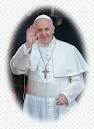
“One has to strongly affirm that condemnation to the death penalty is an inhuman measure that humiliates personal dignity, in whatever form it is carried out.” ---Pope Francis
Inmates on death row are the most forgotten people in the prison system. Each week I am posting in this space several inmates’ names and locations. I invite you to write a postcard to one or more of them to let them know that: we have not forgotten them; are praying for them and their families; or whatever personal encouragement you might like to give them. If the inmate responds, you might consider becoming pen pals.
Please write to:
Seaga M Gillard #1428278 (3/4/2019) David Godwin #1142266 (4/23/2019)
Central Prison, PO Box 247, Phoenix MD 21131 (While the prison is in Raleigh mail for inmates is processed at this address)
For more information on the Catholic position on the death penalty go to the Catholic Mobilizing Network: http://catholicsmobilizing.org
“First Impressions” is a service to preachers and those wishing to prepare for Sunday worship. It is sponsored by the Dominican Friars. If you would like “First Impressions” sent weekly to a friend, CLICK HERE.
If you would like to support this ministry, please send tax deductible contributions to:
Fr. Jude Siciliano, OP Holy Rosary Priory 3600 Travis St. Houston, TX 77002-9591
Make checks payable to: Dominican Friars. Or go to our webpage to make a secure online donation:
(Always includes the 6 latest reflections with the newest first.)
• |
|




 Antwan Anthony
#1293151 (On death row since 4/6/2016)
Antwan Anthony
#1293151 (On death row since 4/6/2016)


